
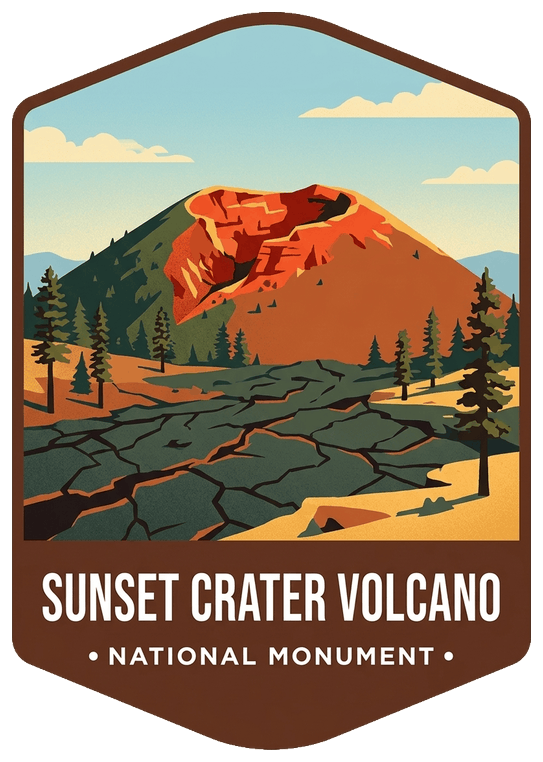
About Sunset Crater Volcano
The lava flow lies on the land like a dream, a wonderland of rock. A thousand years ago the ground was torn open and lava erupted into the sky, forever changing the landscape and the lives of the people who lived here. A thousand years later, trees and flowers grow among the rocks, and people visit the lava flow to see and remember the most recent volcanic eruption in Arizona.
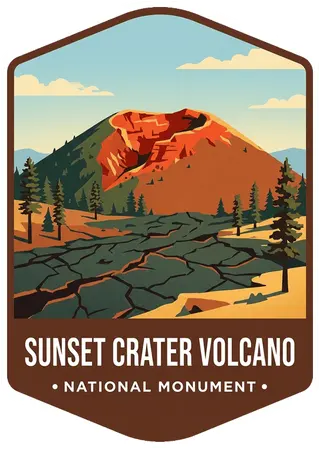
On the badge
Sunset Crater is the youngest in a string of volcanoes in the San Francisco volcanic field that is related to the nearby San Francisco Peaks. Final volcanic activity in the 13th century painted the upper portion of the cone with bright red and orange rocks, giving the volcano….
Planning a visit
Things to do
- Astronomy
- Stargazing
- Guided Tours
- Self-Guided Tours - Walking
- Junior Ranger Program
- Park Film
- Museum Exhibits
- Shopping
- Bookstore and Park Store
Weather
Be prepared for variable and extreme weather conditions. Expect high winds any time of year. Summer temperatures are often above 95ºF (35ºC) and we have afternoon thunderstorms from July through September. Snow, ice, and freezing temperatures are common in the winter. Dress in layers, as weather at Sunset Crater Volcano can change quickly at any time of year.
Getting there
From Flagstaff, travel north on US Highway 89; from Page and the east entrance of the Grand Canyon, travel south on Highway 89. Sunset Crater Volcano and Wupatki National Monuments are both on the loop road FR-545, which meets Highway 89 near mile markers 430 (Sunset Crater Volcano) and 444 (Wupatki).
Entrance fees
- Private Vehicle$25
- Motorcycle$20
- Per Person$15
- Non-commercial Groups$15
Visitor details courtesy of the National Park Service. Official Sunset Crater Volcano site
 ChiricahuaAZ
 Grand CanyonAZ
 Petrified ForestAZ
 SaguaroAZ
 Agua FriaAZ
 Apache–SitgreavesAZ, NM
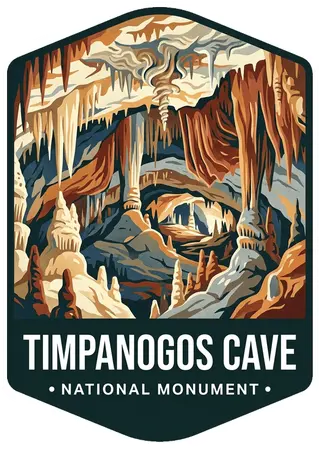 Timpanogos CaveUT
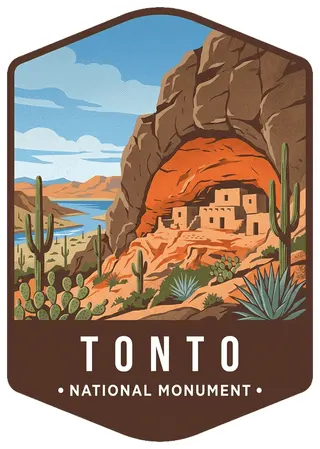 TontoAZ
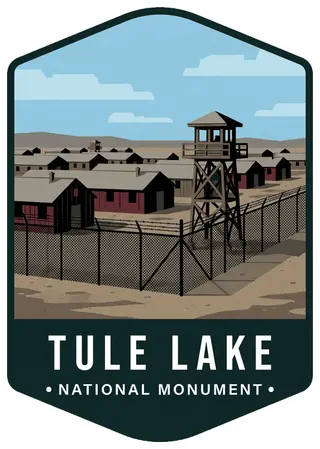 Tule LakeCA
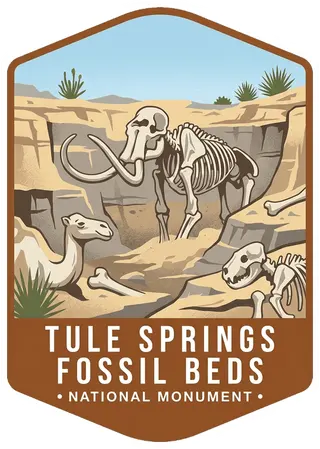 Tule Springs Fossil BedsNV
 Upper Missouri River BreaksMT
 Vermilion CliffsAZ