
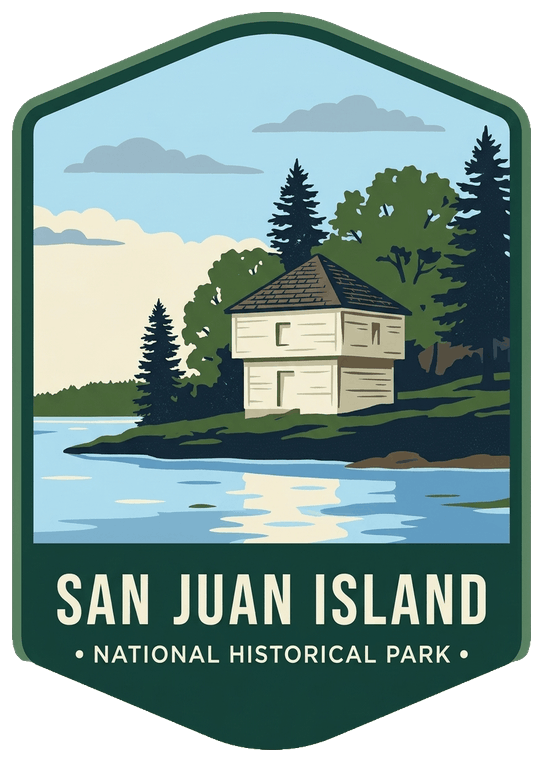
About San Juan Island
San Juan Island is well known for its splendid vistas, saltwater shores, quiet woodlands, orca whales and one of the last remaining native prairies in the Puget Sound/Northern Straits region. But it was also here in 1859 that the United States and Great Britain nearly went to war over possession of the island, the crisis ignited by the death of a pig.
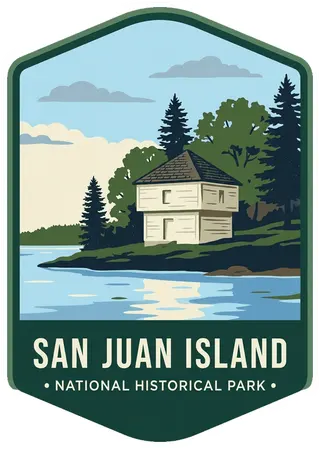
On the badge
The white wooden blockhouse of English Camp at the edge of Garrison Bay, against dark Douglas fir.
Planning a visit
Things to do
- Arts and Culture
- Cultural Demonstrations
- Biking
- Food
- Picnicking
- Guided Tours
- Self-Guided Tours - Walking
- Hiking
- Hunting and Gathering
- Gathering and Foraging
- Living History
- Reenactments
- Historic Weapons Demonstration
- First Person Interpretation
Weather
Spring: Temperatures usually range from 40 F to 60 F. Wildflowers are at their peak around May. Summer: Temperatures usually range from 45 F to 70 F. On very sunny days, be prepared with water-heat exhaustion is a common complaint among park visitors who are unprepared. Fall: Temperatures usually range from 40 F to 65 F. Rain is common. Winter: Temperatures range from 35 F to 50 F. Be prepared with cold and wet weather gear and numerous layers if you intend to be outside. Rain and wind are common.
Getting there
San Juan Island is served by Washington State Ferries, several private cruise and shuttle craft and two air carriers (one of which has both land and seaplane service). The Washington State Ferries terminal is 85 miles north of Seattle and 90 miles south of Vancouver, BC in Anacortes, WA.
Visitor details courtesy of the National Park Service. Official San Juan Island site
 Mount RainierWA
 North CascadesWA
 Columbia River GorgeOR, WA
 ColvilleWA
 Fort VancouverWA, OR
 Gifford PinchotWA
 SaratogaNY
 SitkaAK
 Ste. GenevieveMO
 Thomas EdisonNJ
 TumacácoriAZ
 Valley ForgePA