
About Sitka
On an island amid towering spruce and hemlock, Sitka National Historical Park preserves the site of a battle between invading Russian traders and Indigenous Kiks.ádi Tlingit. Totem poles from Tlingit and Haida areas line the park’s scenic coastal trail, and the restored Russian Bishop’s House is a rare reminder of Russia’s colonial legacy in North America.
On the badge
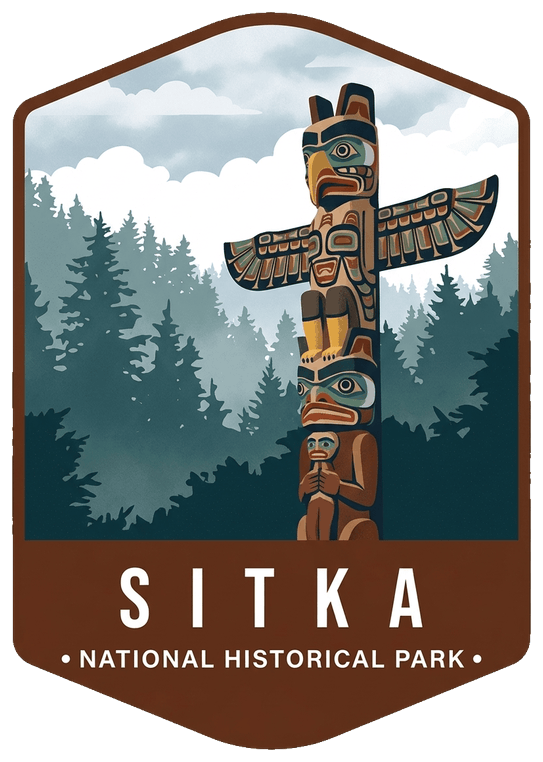
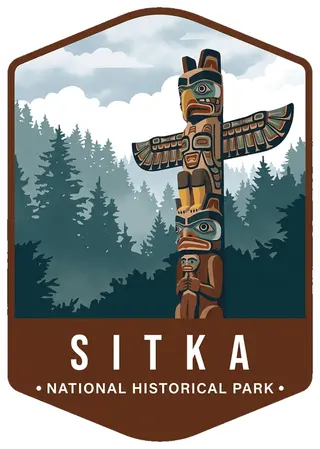
A tall carved and painted cedar totem pole, against misty dark Sitka spruce rainforest.
Planning a visit
Things to do
- Arts and Culture
- Craft Demonstrations
- Fishing
- Food
- Picnicking
- Guided Tours
- Hands-On
- Citizen Science
- Hiking
- Hunting and Gathering
- Gathering and Foraging
- Junior Ranger Program
- Wildlife Watching
- Birdwatching
Weather
Sitka experiences a temperate maritime climate, characterized by heavy precipitation and a small temperature range between seasons. Summer temperatures range from high 50s to high 60s F with frequent rain. Winter is rainy and snowy with temperatures from the high teens to the 40s F. Well prepared visitors will have rain gear and layered clothing at any time of year.
Getting there
Sitka National Historical Park is located in downtown Sitka, Alaska. Sitka is situated on Baranof Island, on the outer coast of Alaska's Inside Passage. No roads connect the city to the mainland; Sitka can be reached only by air or sea. Visitors can travel to Sitka by scheduled and charter air services, ferry, and cruise ships.
Visitor details courtesy of the National Park Service. Official Sitka site
 DenaliAK
 Gates of the ArcticAK
 KatmaiAK
 Kenai FjordsAK
 Kobuk ValleyAK
 Lake ClarkAK
 Ste. GenevieveMO
 Thomas EdisonNJ
 TumacácoriAZ
 Valley ForgePA
 War in the PacificGU
 Weir FarmCT