About Katmai
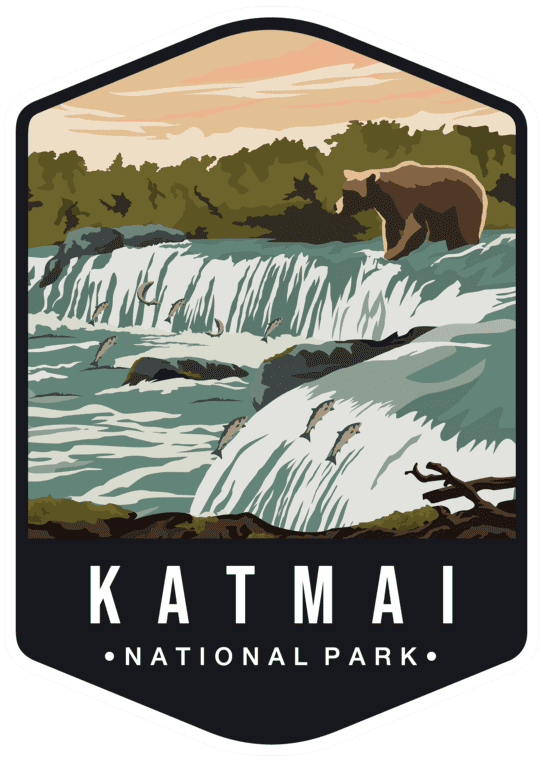
Katmai is home to one of the largest protected brown bear populations on Earth, gathering at Brooks Falls to catch leaping sockeye salmon. The Valley of Ten Thousand Smokes preserves the ash from the largest volcanic eruption of the 20th century.
A landscape is alive underneath our feet, filled with creatures that remind us what it is to be wild. Katmai was established in 1918 to protect the volcanically devastated region surrounding Novarupta and the Valley of Ten Thousand Smokes. Today, Katmai National Park and Preserve also protects 9,000 years of human history and important habitat for salmon and thousands of brown bears. (National Park Service)
Don't miss
- Brooks Falls bear viewing
- Valley of Ten Thousand Smokes
- Fat Bear Week
- Naknek Lake
When to go
July and September for bears
Planning a visit
Things to do
- Boating
- Camping
- Backcountry Camping
- Canoe or Kayak Camping
- Fishing
- Fly Fishing
- Food
- Dining
- Picnicking
- Flying
- Guided Tours
- Hiking
- Backcountry Hiking
- Hunting and Gathering
Weather
Located between the stormy north Pacific Ocean and the even stormier Bering Sea, the Katmai region is often a battleground between weather systems. When you visit, be prepared to encounter all types of weather. On average, wet and cool conditions predominate in spring, summer, and fall. Winters are drier and colder.
Getting there
Katmai National Park & Preserve is located on the northern Alaska Peninsula, northwest of Kodiak Island and southwest of Homer, Alaska. The park’s headquarters is in King Salmon, about 290 air miles southwest of Anchorage. Unlike most national parks in the United States, Katmai is almost exclusively accessed by plane or boat.
Visitor details courtesy of the National Park Service. Official Katmai site
 DenaliAK
 Gates of the ArcticAK
 Glacier BayAK
 Kobuk ValleyAK
 Wrangell–St. EliasAK
 Admiralty IslandAK
 Kings CanyonCA
 Lassen VolcanicCA
 Mammoth CaveKY
 Mesa VerdeCO
 Mount RainierWA
 New River GorgeWV