About White Sands
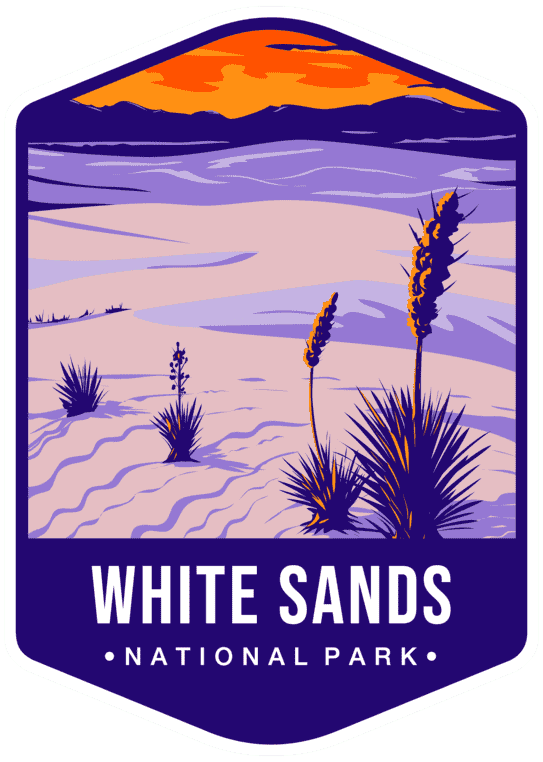
Wave-like dunes of glistening white gypsum sand cover 275 square miles of the Tularosa Basin, the largest gypsum dunefield on Earth. Sledding down the dunes is a park tradition.
Rising from the heart of the Tularosa Basin is one of the world's great natural wonders - the glistening white sands of New Mexico. Great wave-like dunes of gypsum sand have engulfed 275 square miles of desert, creating the world's largest gypsum dunefield. White Sands National Park preserves a major portion of this unique dunefield, along with the plants and animals that live here. (National Park Service)
Don't miss
- Dunes Drive
- Alkali Flat Trail
- Interdune Boardwalk
- Sunset strolls
When to go
March to May and September to November
Planning a visit
Things to do
- Auto and ATV
- Scenic Driving
- Biking
- Road Biking
- Camping
- Backcountry Camping
- Food
- Picnicking
- Guided Tours
- Hiking
- Junior Ranger Program
Weather
Temperatures at White Sands vary greatly throughout the year. Summer time temperatures can be very hot. Winters are mild with cool evenings. Spring time is the windy season. Fall is very enjoyable with mild daytime and night time temperatures.
Getting there
White Sands National Park is located off of US Highway 70 between the cities of Las Cruces and Alamogordo. The park is about 15 miles west of Alamogordo and 52 miles east of Las Cruces.
Entrance fees
- Private Vehicle$25
- Per Person$15
- Motorcycle$20
- Van$50
Visitor details courtesy of the National Park Service. Official White Sands site
 Carlsbad CavernsNM
 Apache–SitgreavesAZ, NM
 Aztec RuinsNM
 BandelierNM
 Capulin VolcanoNM
 CarsonNM
 Wind CaveSD
 Wrangell–St. EliasAK
 YellowstoneWY, MT, ID
 YosemiteCA
 ZionUT
 AcadiaME