
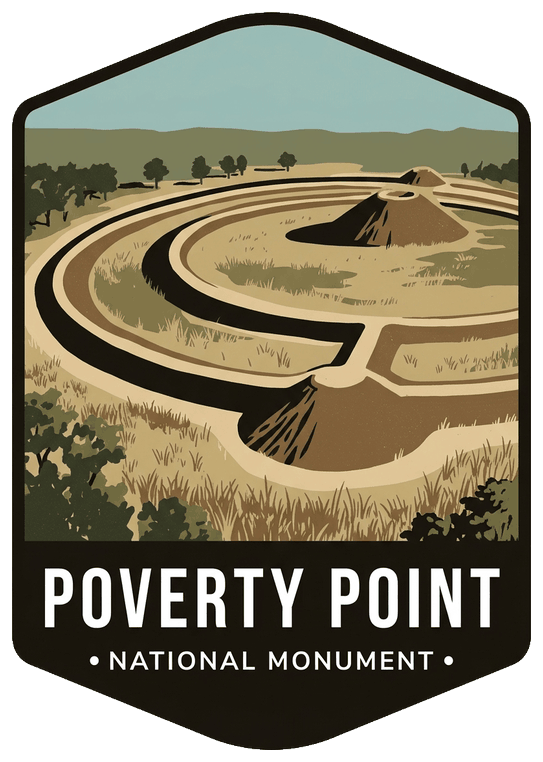
About Poverty Point
Now a nearly forgotten culture, Poverty Point at its peak 3,000 years ago was part of an enormous trading network that stretched for hundreds of miles across the continent. It was - and is - also an engineering marvel, the product of five million hours of labor. Explore the culture of a highly sophisticated people who left behind one of North America’s most important archeological sites.
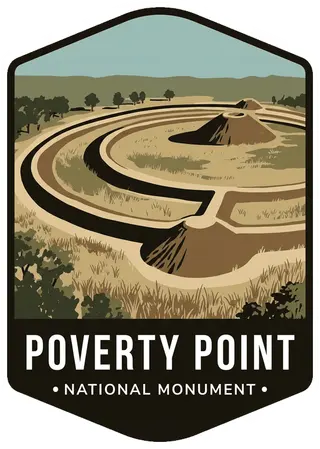
On the badge
Poverty Point is a prehistoric archeological site that dates from between 1650 and 700 BC and consisting of six earthen rings and seven mounds. The diameter of the outside ridge is 0.75 miles (1.21 km), and the largest mound rises 51 feet (16 m). Although an NPS unit, the….
Planning a visit
Things to do
- Guided Tours
- Self-Guided Tours - Walking
- Hiking
- Museum Exhibits
Weather
Summers are sunny, hot, and humid. Winters tend to be mild; however, humid rainy periods occur throughout the year. Sudden and severe thunderstorms are common, so stay alert to weather forecasts. Check with rangers at the Visitor Center and/or USS Cairo Museum for updates on weather patterns. Wear comfortable sportswear appropriate for the season, with walking or hiking shoes recommended.
Getting there
By car, from Interstate 20, take the Delhi exit and travel north on LA 17, east on LA 134 and north on LA 577.
Visitor details courtesy of the National Park Service. Official Poverty Point site
 Cane River CreoleLA
 Jean LafitteLA
 KisatchieLA
 New Orleans JazzLA
 Prehistoric TrackwaysNM
 President Lincoln and Soldiers’ HomeDC
 Rainbow BridgeUT
 Río Grande del NorteNM
 Rose Atoll MarineAS
 Russell CaveAL