
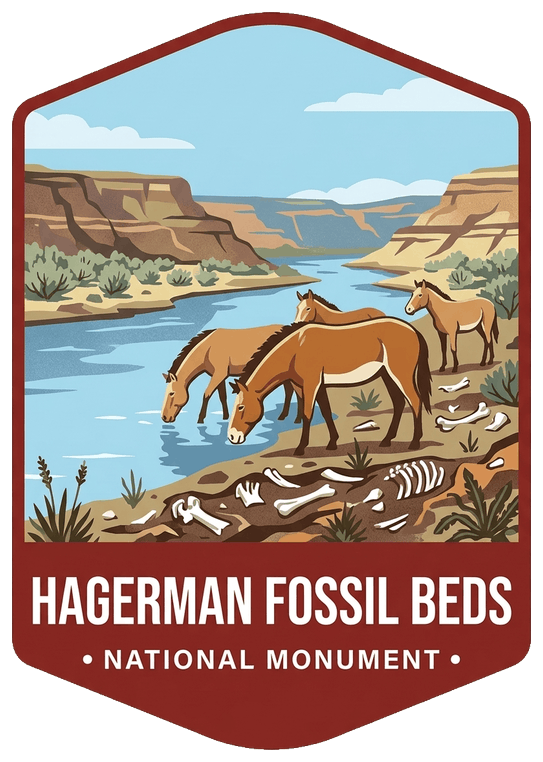
About Hagerman Fossil Beds
During the Pliocene, this place looked quite different. Lush wetlands, forests, and grasslands provided excellent habitat for a variety of animals. From fascinating, now-extinct creatures like the saber-toothed cat, mastodon, and ground sloth, to more familiar animals like horses, beavers, and birds, the scientific study of Pliocene fossils is the key to Hagerman.
On the badge
This monument contains the largest concentration of Hagerman horse fossils in North America. It protects the world's richest known fossil deposits from the late Pliocene epoch, 3.5 million years ago. These plants and animals represent the last glimpse of time that existed….
Planning a visit
Things to do
- Auto and ATV
- Scenic Driving
- Food
- Picnicking
- Guided Tours
- Self-Guided Tours - Walking
- Hiking
- Front-Country Hiking
- Junior Ranger Program
- Wildlife Watching
- Birdwatching
- Museum Exhibits
- Shopping
- Gift Shop and Souvenirs
Weather
Hagerman, Idaho, gets 10 inches of rain per year. On average, there are 213 sunny days per year in Hagerman, Idaho. The July high is around 94 degrees. The January low is 22. Our comfort index, which is based on humidity during the hot months, is a 78 out of 100, where higher is more comfortable. The US average on the comfort index is 44.
Getting there
The Thousand Springs Visitor Center is located about one mile north of downtown Hagerman on US Highway 30.
Visitor details courtesy of the National Park Service. Official Hagerman Fossil Beds site
 YellowstoneWY, MT, ID
 BitterrootMT, ID
 Caribou–TargheeID, WY, UT
 CurlewID
 Hells CanyonOR, ID
 Idaho PanhandleID, MT, WA
 Hanford ReachWA
 Harriet Tubman Underground RailroadMD
 Hohokam PimaAZ
 HovenweepCO, UT
 Ironwood ForestAZ
 Jewel CaveSD