
About Keweenaw
The stories of people and copper in the Keweenaw Peninsula have been intertwined for more than 7,000 years. Indigenous peoples made copper into tools and trade items. Investors and immigrants arrived in the 1800s in a great mineral rush, developing thriving industries and cosmopolitan communities. Though the mines have since closed, their mark is still visible on the land and people.
On the badge
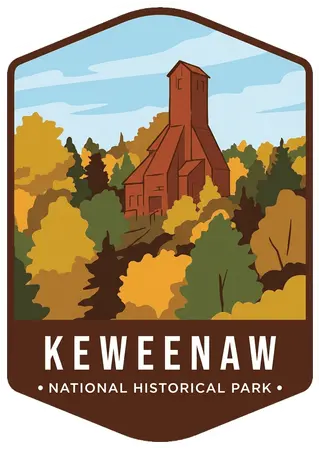
The tall rust-red Quincy Mine No. 2 shaft-rockhouse on a hillside, against Upper Peninsula forest in fall color.
Planning a visit
Things to do
- Biking
- Mountain Biking
- Road Biking
- Compass and GPS
- Geocaching
- Food
- Guided Tours
- Self-Guided Tours - Walking
- Self-Guided Tours - Auto
- Hiking
- Backcountry Hiking
- Front-Country Hiking
- Junior Ranger Program
- Park Film
Weather
Summer: Keweenaw summers are usually mild, with average highs in the 70s, but can reach into the 80s and 90s. Nighttime temperatures are typically cool, but can also dip into the 40s or stay in the 70s. Summer months are dry, with occasional rain or severe thunderstorms. Winter: Again influenced by Lake Superior, winter temperatures are mild with highs in the 20s. Cold spells can occur with subzero temperatures. Lake effect snow is common, and 300 inches of snow can fall in a season.
Getting there
Keweenaw National Historical Park is located is located on the Keweenaw Peninsula, the northernmost part of Upper Michigan.
Visitor details courtesy of the National Park Service. Official Keweenaw site
 Father MarquetteMI
 Huron–ManisteeMI
 Pictured RocksMI
 River RaisinMI
 Saint Helena IslandMI
 Sleeping Bear DunesMI
 Klondike Gold RushAK, WA
 Lewis and ClarkOR, WA
 LowellMA
 Lyndon B. JohnsonTX
 Manhattan ProjectNM, TN, WA
 Marsh-Billings-RockefellerVT