
About Fort Smith
Explore life on the edge of frontier and Indian Territory through the stories of soldiers, the Trail of Tears, scandals, outlaws, and lawmen who pursued them. From the establishment of the first Fort Smith on December 25, 1817, to the final days of Judge Isaac C. Parker's jurisdiction over Indian Territory in 1896, Fort Smith National Historic Site preserves almost 80 years of history.
On the badge
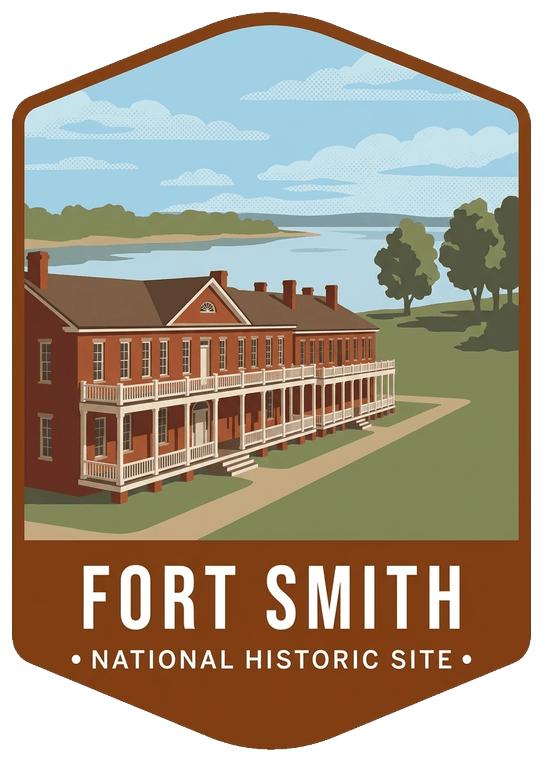
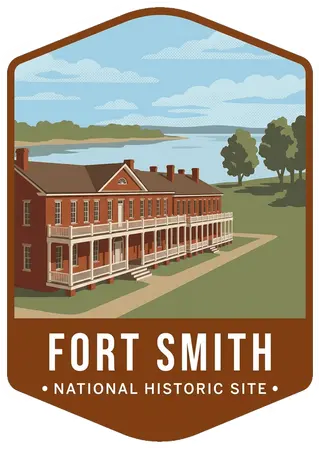
Long two-story red-brick barracks and courthouse with a white wooden veranda, the broad Arkansas River beyond.
Planning a visit
Things to do
- Guided Tours
- Self-Guided Tours - Walking
- Junior Ranger Program
- Park Film
- Museum Exhibits
- Shopping
- Bookstore and Park Store
Weather
Fort Smith weather includes four distinct, yet temperate seasons. Spring and fall are usually mild while late summer is hot and humid. During winter months, temperatures occasionally dip into the teens. Forecast often changes dramatically due to surrounding weather influences. Arkansas's central location allows weather systems from all directions to influence its climate. The area is prone to flash flooding and river flooding in rainy seasons.
Getting there
From Interstate 40 Eastbound: Exit at Roland and drive six miles on highway 64 to downtown Fort Smith. From Interstate 40 Westbound & from North Interstate 540 & Fayetteville: Take Interstate 40 Westbound to Interstate 540 south. Exit west on Rogers Ave and continue towards downtown Fort Smith. In the downtown area: On Rogers or Garrison Ave, turn south at 4th St. Turn right onto Garland Ave. Entrance to the main parking lot is at the end of the next block. Oversize parking is available.
Visitor details courtesy of the National Park Service. Official Fort Smith site
 Hot SpringsAR
 Arkansas PostAR
 Little Rock Central High SchoolAR
 President William Jefferson Clinton Birthplace HomeAR
 Fort Union Trading PostMT, ND
 Fort VancouverWA, OR
 Frederick DouglassDC
 Frederick Law OlmstedMA
 Friendship HillPA
 Gloria Dei Old Swedes' ChurchPA